
Are you studying effectively? Perhaps you, like me, thought you had a handle on studying: you read, take notes, review those notes, simple. It turns out that our normal study habits (underlining, re-reading) aren’t nearly as effective as we think they are. Fortunately, there has been significant work done in the field of cognitive psychology on how to effectively study and retain information. The research is ongoing, but here are six evidence-backed practices to improve your study sessions.
First Pillar: Retrieval Practice
What do we mean by retrieval practice? Retrieval simply means forced recall of information. After you’ve learned new information through a lecture, experience, book etc., you’re not actively thinking about that information all the time. After a good night’s sleep, the information gets encoded into our long-term memory, and when we actively bring that information back to mind for a test or a trivia night what we’re doing is retrieving the information from our long-term memory back into our working memory.
There are several ways to practice retrieval – you already know several of them: flashcards, quizzes, and explaining information without the use of notes; anytime you actively recall the information, you’re retrieving. When you pull information from your long-term memory, that act of ‘pulling’ reinforces the neural connections in the brain associated with that piece of information. The more you practice with flashcards, the easier it gets – your neural pathways to that information are being streamlined.
Now this is important: when you’re recalling information and practicing retrieval, you should not look at your notes. Knowing where the answer is and how to find the answer are valuable skills, but that’s not the point of retrieving; you have to recall the information from memory. Once you’re done, you should review to make sure you have the correct answers or seek effective feedback – when you’re aware of the gaps in your knowledge it can make you more focused on retaining that missing information.
There are more ways to practice retrieval: You can create a review guide; you can draw a concept map or Venn diagram from memory; you can use a compare and contrast method – what makes the subject you’re studying different from another? As you’ll see below, the reason that retrieval is the first pillar is because all other study methods relate back to it.
Second Pillar: Spacing
You just got out of class, you took your notes, and now it’s time to review them, right? Wrong. You have a final exam coming up — it’s time to buckle down and put in marathon sessions at the library. Wrong.
Spacing is exactly what it sounds like, spacing out study sessions. The only way for us to effectively practice retrieval is when information leaves our working memory – you have to ‘forget’ the information so that you can pull it back out of long-term memory. The more times you practice retrieving pieces of information, and then forget them, the more reinforced that piece of information is going to be, and spacing increases the number of times you can effectively use retrieval practice.
Cramming can (and does) work under certain circumstances, but it doesn’t help with long-term retention of material. Five hours spread out over the course of a week or more will produce better results than one five-hour study session, and a few hours of good work is more effective than several hours of poor work.
What does this look like in practice? Spread out your study sessions throughout the week or semester. If you have a class on Monday, review the notes and practice retrieving the information on Tuesday. Preferably, study a little bit for each class every day (it can be a short review of flashcards), but don’t study the same information every day – incorporate older material and mix up the information.
Third Pillar: Interleaving
You’re probably familiar with ‘blocking’ – you block out time dedicated to studying one subject, and while you’re studying you focus on one set of similar topics. This can be helpful when you’re first introduced to a subject, but as the material becomes more complex or more subtle the differences can become more difficult to detect – luckily there’s another learning strategy that helps with this specifically: interleaving.
Interleaving in practice is simply intermixing the order of material while you review your study material. Let’s say you’re learning a new language; instead of practicing vocabulary terms blocked out by topic (all the words for places, the library, the restaurant, etc.), intermix those terms with different topics, objects, activities, etc.
Interleaving is especially helpful for subjects that require discrimination: what makes this different from that? The reason interleaving improves the quality of studying is because it requires determining the appropriate method for the different material. Practicing the same type of question repeatedly doesn’t require you to determine the correct method and is therefore less effective at mastering the material.
Importantly, the data supporting interleaving’s effectiveness as a study method is primarily intra-subject; that is for interleaving to be effective you should switch between topics that are within the same subject.
Interleaving topics also provides more opportunities to incorporate older material and look for connections. What are the differences and similarities between different kinds of problems? Are there any underlying connections? You can add elaborative interrogation questions or switch from reviewing questions to identifying images on flashcards. Don’t switch too often within one study session, but the next time you study a topic, change the order in which you review materials.
Fourth Pillar: Elaborative Interrogation
When you’re studying, ask yourself: do you really understand the information? How does it work? Why does it work? Elaboration interrogation is just that – asking ‘why’ and ‘how’ questions and coming up with your own answers to those questions. Flashcards can help with ‘what’ – but how and why require understanding the material – and this is an effective method of encoding the information into our long-term memory.
There are several ways to do this: make a study guide with open-ended ‘how and why’ questions, write a short note on the topic, or you can (and should!) present the information to a study group while you explain the material in your own words. If you don’t have a study group, you can practice explaining the information out loud to yourself.
The reason this method is so effective is because what you’re doing is incorporating the new information with your existing long-term memory, which is why it is suggested that you use your notes and reference materials when answering elaborative questions. It’s important the answers we create for these questions are accurate – if your answer is wrong, you’ll remember the wrong answer and encode the wrong information.
Perhaps the topic that you’re reviewing doesn’t lend itself to ‘why’ and ‘how’ questions, perhaps it’s a technical subject. What is the proper order of operations? What are the core concepts underlying the topic? You can incorporate the use of metaphors and analogies: how is this information that you’re reviewing different from or similar to other topics? Whatever the subject is, the aim should be eventual mastery so that you can come up with responses without the use of study aids.
Fifth Pillar: Dual Coding
The brain likes images. They’re easier to remember and can convey information more effectively than plain text. Dual coding is simply the combination of images with written information. This can be especially helpful when learning a new language, or when you’re learning something that relates directly to spatial information (medicine, geography).
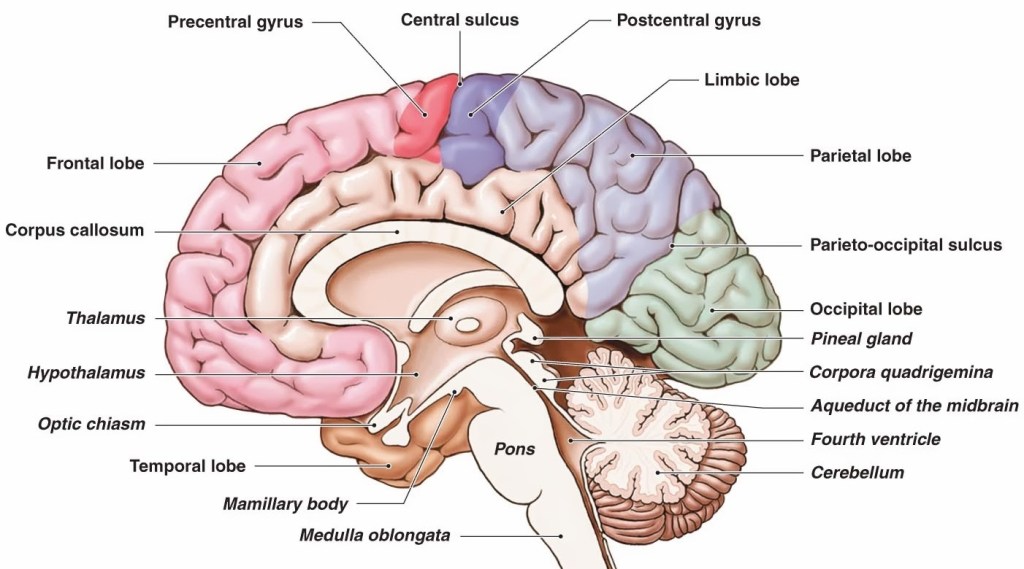
Visual examples reduce conceptual errors and can be helpful in conveying abstract ideas. This is why textbooks almost always include some sort of imagery to help convey information. Images paired with text are just one form of dual coding; concept maps or flowcharts which show causal relationships can also be helpful in visualizing complex ideas or tasks.
When we’re studying, dual coding can be used alongside the other methods we’ve discussed thus far: our flashcards can incorporate images for retrieval, and our elaborative questions can be paired with flowcharts that demonstrate how and why. One particularly effective method for retrieval is simple concept mapping. Ask yourself, how do the different aspects of a subject connect? Then create a diagram showing the connections.
They don’t have to be complex; they can be as simple as a timeline or as intricate as you’d like. Use dual coding as an opportunity to practice some creativity; your study sessions will be more effective if you’re having some fun.

Sixth Pillar: Concrete Examples
Our final pillar is concrete examples – when we’re studying something abstract (like mathematics), it is helpful to relate the material to something practical. Ben has 6 apples, Tomas has 3 apples, how many apples do they have together? Remember those?
Our brains are still roughly the same as they were 10,000 years ago, and they’re still wired for concrete information. Text, mathematics, these are still ‘abstract’ concepts, and using practical examples makes it easier to understand concepts that aren’t immediately intuitive.
Like our elaborative questions, it’s important that we stress accuracy when we’re creating examples: an example that is easy to remember but flawed, is a recipe for encoding the wrong information. It’s also important that the example is relevant to the idea it’s paired with; using an example that isn’t relevant or is too goofy causes it to lose effectiveness when it is paired with retrieval and encoding.
Like the other retrieval practices, it is better if you create these examples without the use of notes, but if you’re struggling to come up with your own examples it is okay to check for existing examples to help create your own. Try creating multiple examples that address the underlying structure of the topic you’re studying and create links to the rest of the topic.
Each of these strategies work together and it’s likely you’re already practicing some of them. Take a minute before your next study session and think about how you can incorporate them into your existing study sessions – and keep spacing in mind as you plan out your week and study schedule. You can even create a review guide or flashcards on these methods to help make them stick! Like everything else to do with the brain, make sure to get good sleep, and good luck studying!
–
All credit for the information in this post needs to be directed to The Learning Scientists. For my part this was a writing exercise and a way to familiarize myself with the most effective way to study personally. If you’re interested in learning more about the science behind studying and more effective practices, you should check out their blog here.
Sources
Clark, D. (2016, March 30). One book on learning that every teacher, lecturer & trainer should read (7 reasons). Donald Clark Plan B. https://donaldclarkplanb.blogspot.com/2016/03/one-book-on-learning-that-every-teacher.html
Fordham, M. (2014, August 6). Make History Stick Part 1: Principles. Clio et Cetera. https://clioetcetera.com/2014/08/06/make-history-stick-part-1-principles/
Smith, M., & Wooldridge, C. (2017, April 20). When do the 6 Strategies for Effective Learning Work Best? The Learning Scientists. https://www.learningscientists.org/blog/2017/4/20-1
Weinstein, Y., Madan, C. R., & Sumeracki, M. A. (2018). Teaching the science of learning. Cognitive research: principles and implications, 3(1), 2. https://doi.org/10.1186/s41235-017-0087-y



Leave a Reply